
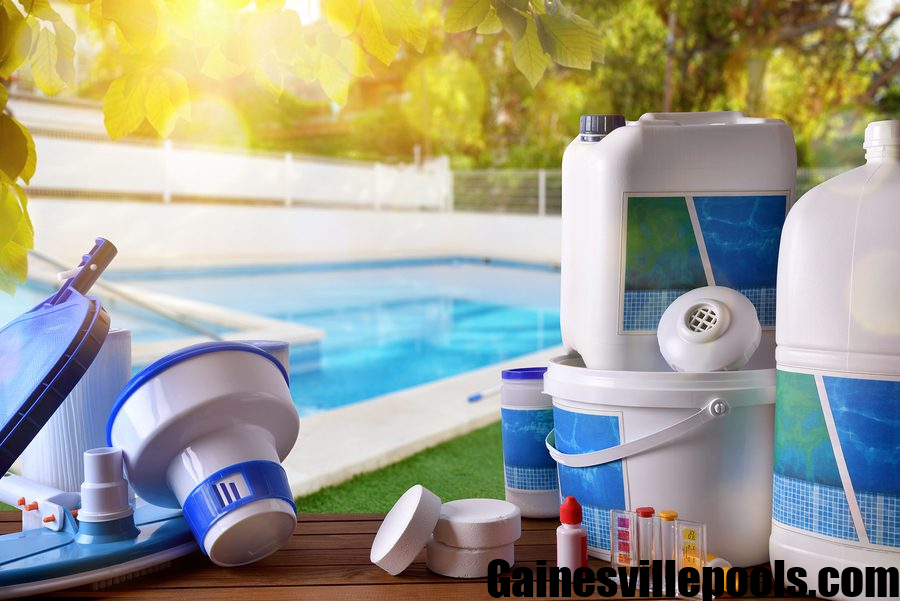
Florida pools run longer seasons, hotter water and heavier rainfall than almost anywhere else in the country, and equipment that performs fine in a milder climate gets exposed fast here. Choosing well matters more than choosing expensive, and most of the decisions come down to four systems: circulation, heating, cleaning and the electronics that watch over all of it.
Variable Speed Pumps Are No Longer Optional
A single speed pump has one setting: full. It moves water faster than any residential pool needs for filtration and draws power the entire time it runs. Because pump energy rises steeply with speed, running a pump slower for longer moves the same total volume of water while drawing substantially less electricity. That relationship is the whole argument for variable speed.
The practical setup for most Florida backyards is a long, low-speed filtration cycle that turns the water over once or twice a day, with short bursts at higher speed only when a feature needs the flow. Those bursts are worth planning for:
- Suction-side cleaners need enough flow to actually crawl.
- Solar panels on a roof need head pressure to reach the collectors.
- Water features and spa jets need their own speed profile.
- Backwash cycles on sand filters need full flow to lift and flush the bed.
A good installer programs these as named schedules rather than leaving the homeowner to guess. It is also worth confirming the pump’s plumbing is not the bottleneck. A high-efficiency pump strangled by undersized suction pipe loses most of its advantage to friction before the water ever reaches the filter.
Heaters: Match the Technology to the Months
Heat pumps and gas heaters solve different problems and homeowners routinely buy the wrong one.
A heat pump moves ambient heat into the water rather than generating it. It is efficient in warm air, which describes most of the Florida calendar, but its output falls as air temperature drops, which is exactly when a January cold snap makes a heater desirable. A gas heater does not care about air temperature and raises water temperature quickly, which suits a pool used occasionally and heated on demand. It costs more per hour of operation.
The sensible rule: a pool swum in daily or near daily across a long season leans toward a heat pump. A pool heated for weekends, guests or holidays leans toward gas. A spa attached to a pool almost always wants gas, because nobody waits eight hours for a hot tub.
| Factor | Heat pump | Gas heater |
|---|---|---|
| Best use pattern | Daily or near daily swimming | Occasional, heated on demand |
| Speed to temperature | Slow, measured in hours | Fast |
| Sensitivity to cold snaps | Output drops with air temperature | Unaffected |
| Running cost per hour | Lower | Higher |
| Suits an attached spa | Poorly | Well |
Whatever the choice, a cover does more for heating costs than the heater specification does. Evaporation is the single largest heat loss path on an open pool, and it runs all night.
Robotic Cleaners Have Quietly Overtaken the Alternatives
Suction and pressure cleaners borrow energy from the pool’s own circulation system, which means the pump has to work harder to run them. Robotic cleaners carry their own low-voltage motor, filter debris into an onboard basket instead of pushing it through the main filter, and scrub surfaces rather than just agitating them.
What separates a good robot from a frustrating one:
- Brush type matched to the surface, since a brush that grips plaster can slide on tile or fiberglass.
- Filter basket access from the top, so lifting a loaded unit does not dump debris back into the water.
- Cable swivel quality, because tangled cable is the most common complaint in year two.
- Waterline coverage, which is where sunscreen oils and pollen collect in Florida.
- Serviceability, meaning tracks, brushes and impellers sold as replaceable parts.
Cameras and Sensors Around the Deck
Pool-adjacent security has shifted from a niche add-on to something most new installs consider. Cameras covering a pool area serve three separate purposes and the hardware requirements differ for each. Supervision of children means low latency and a live view on a phone. Deterrence means visibility and lighting. Evidence means resolution and reliable storage.
Outdoor cameras near a pool live in an aggressive environment: chlorinated mist, salt from a nearby coast, afternoon storms, and hours of direct sun on a housing. Ingress protection ratings, UV-stable housings and corrosion-resistant fixings matter more here than in a front porch installation. Sensors are equally exposed. Gate contacts, surface wave detectors and immersion alarms all need to survive the same conditions, and a sensor that produces false alerts every windy afternoon stops being read within a fortnight.
None of this replaces physical barriers, supervision or compliance with local pool safety requirements. Electronics supplement layers of protection; they are not a layer on their own.
Where This Equipment Comes From
Very few of these products are made by the company whose badge is on the housing. Pumps, heat pump compressors, robotic cleaner drive units, controllers, cameras and sensors are drawn from a global manufacturing base, much of it concentrated in Asia, and are then specified, badged and warrantied by the brands that installers buy from.
That matters to two groups of readers. Pool builders and service companies who buy in quantity increasingly deal with manufacturers directly rather than through several layers of distribution, particularly for accessories, lighting, controllers and cameras where the margin stack is steep. Homeowners benefit from understanding the supply chain because it explains why two visually identical robotic cleaners can carry different warranties and very different spare part availability.
Buyers who want to see that landscape in one place tend to work from a verified supplier directory and then meet manufacturers in person. The hong kong fair 2026 programme is the largest of these gatherings for consumer and home technology, with the October edition running 11 to 21 October 2026 at AsiaWorld-Expo in two phases. Smart home, security and appliance categories sit in the second phase, 18 to 21 October, which is where pool controllers, outdoor cameras, sensors and connected lighting are shown.
Seeing a Whole Category in One Week
The scale is worth understanding before planning a trip. Across both phases the event hosts more than 4,200 suppliers and over 8,000 booths, with 26 or more product categories and 330,000 or more new products. The second phase alone brings together 2,100 or more suppliers across seven segments, including more than 1,200 AI-themed booths. For a service company evaluating a new cleaner line or a builder standardising on one controller platform, the relevant halls are the smart home fair segments, where security, appliance and home automation suppliers are grouped together rather than scattered.
A Sensible Buying Sequence
For a homeowner replacing equipment piece by piece, order matters:
- Pump first. It runs the most hours and determines what every other component can do.
- Cover second. It changes the heating math before a heater is even chosen.
- Heater third, sized to the actual pool volume and the months it will be used.
- Cleaner fourth, chosen to suit the pool surface and the debris load from surrounding trees.
- Controls and cameras last, once the equipment they are meant to manage is settled.
Reversing that order is how backyards end up with an automation panel controlling a pump that should have been replaced three years earlier.
The Takeaway
Florida conditions reward equipment chosen for long run hours, humidity, UV exposure and corrosive air, and they punish anything specified on headline price alone. Circulation drives everything else, covers do more than heaters, robots have won the cleaning argument on efficiency, and outdoor electronics live or die on their housings. Buyers who understand where the hardware originates, whether they are homeowners or contractors, ask better questions about warranties and spare parts, and those two things determine what a pool costs to own across a decade.