
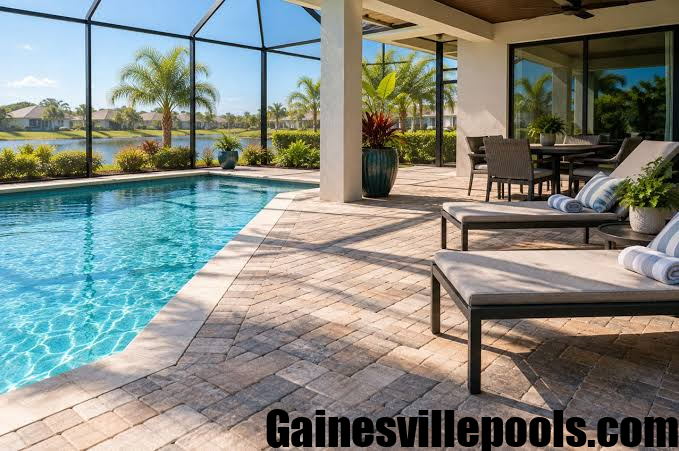
A sparkling pool looks its best when it is framed by green grass, healthy shrubs, and tidy planting beds. In Florida, though, keeping that backyard picture intact can feel like a balancing act. The sun is intense, sandy soils drain quickly, and the weather swings between dry spring stretches and summer afternoons that seem to rain on schedule.
Add pool decks, pavers, and screen enclosures to the mix, and watering the landscape around a pool takes a little more thought than watering an open front yard. Here is how to keep your outdoor living space looking great while wasting less water.
Why Pool Landscapes Are Tricky to Water
The area around a pool is its own microclimate. Concrete and pavers absorb and reflect heat, so turf and plants along the deck edge often dry out faster than the rest of the yard. At the same time, poorly aimed sprinklers can soak the deck, leave mineral spots on pavers, and blow water, grass clippings, and mulch straight into the pool.
Drainage is another factor. Water that runs off the lawn onto hardscape is water your plants never use, and it can carry fertilizer and debris toward the pool or into storm drains.
The good news is that a few changes in how and when you water can solve most of these problems at once.
What Florida Experts Recommend for Lawn Watering
The University of Florida’s IFAS Extension has clear, research-based guidance for Florida lawns, and it starts with watering only when the grass needs it. In its guide to improving your lawn’s drought tolerance, UF/IFAS recommends watering when 30 to 50 percent of the lawn shows at least one of three wilt signs:
- Leaf blades folding in half lengthwise
- A blue-gray tint instead of a healthy green
- Footprints that stay visible in the grass
When you do water, UF/IFAS recommends applying 1/2 to 3/4 inch. Sandier soils may need the 3/4-inch rate, while heavier clay soils in North Florida and the Panhandle may only need 1/2 inch. Less frequent, deeper watering encourages deeper roots, which helps turf ride out dry spells.
Timing and Local Restrictions
UF/IFAS also notes that the best time to irrigate a lawn is in the early morning before sunrise. Daytime watering loses more to evaporation, and watering late in the day can extend the time grass stays wet, which encourages disease.
Keep local rules in mind, too. According to UF/IFAS, in most areas of the state irrigation with potable water is limited to two days a week in the warm months and one day a week in the cooler months. Check with your local utility or water management district for your specific watering days.
Common Watering Mistakes Around the Pool Deck
Setting It and Forgetting It
Many irrigation timers run the same program all year. UF/IFAS points out that failing to adjust for seasonal changes usually leads to overwatering, which can increase disease, thatch buildup, and weeds such as dollarweed and sedges. A schedule that suits May will be far too much for January.
Watering Through the Rainy Season
UF/IFAS notes that most parts of Florida receive 50 or more inches of rain per year on average, and that irrigation should be turned off when rainfall is adequate. Running sprinklers the morning after a summer downpour is one of the most common ways Florida homeowners waste water.
Sprinklers That Hit the Deck or the Pool
Walk your yard while each zone runs. If spray heads are wetting pavers, the pool cage, or the water itself, adjust the arc or swap to lower-angle nozzles. Along narrow strips next to the deck, drip line or micro-irrigation is often a better fit than spray heads.
How Automatic Watering Helps, When It Is Set Up Right
An automatic system is only as smart as the schedule behind it. A basic clock timer will water on Tuesday whether it rained Monday night or not. Newer connected controllers can respond to conditions instead of the calendar.
Features worth looking for include rain delay or weather-based skipping, soil moisture sensing, multiple zones, and app control so you can pause watering from your phone before a pool party or during a stretch of storms. Pairing those features with the UF/IFAS “water as needed” approach turns your irrigation into a genuinely water-saving irrigation system rather than one that runs on autopilot. RainPoint, for example, offers a setup that combines soil moisture and weather sensors with app-based scheduling, which fits well with this kind of need-based watering.
Separate Zones for Turf, Beds, and Containers
Grass, shrubs, and potted plants on the lanai all have different needs. Give each its own zone when possible:
- Turf: deep, infrequent watering when wilt signs appear, within your allowed watering days.
- Planting beds: drip or micro-irrigation that keeps water off the deck and out of the pool.
- Containers: shorter, more frequent cycles, since pots in full sun dry out quickly.
Plant Choices That Make Watering Easier
Irrigation is only half the equation. The plants you put around the pool determine how much water the landscape needs in the first place.
Choose plants suited to your part of Florida and to the specific conditions near the deck, including reflected heat, salt or chlorine splash, and full sun. UF/IFAS’s Florida-Friendly Landscaping program is a helpful starting point for selecting the right plant for the right place.
A few design tips also help:
- Keep turf and thirsty plants a few feet back from the pool edge, using gravel, pavers, or mulched beds as a buffer.
- Group plants with similar water needs together so one zone does not overwater another.
- Use 2 to 3 inches of mulch in beds to hold moisture and limit weeds, but keep it clear of the deck so it does not wash or blow into the pool.
- Avoid messy plants that drop leaves, flowers, or fruit near the water, which saves on skimming as well as watering.
A Simple Seasonal Checklist
- Spring: Check every sprinkler head and drip line for damage or misalignment before the dry season heats up.
- Summer: Lean on rain delay or weather-based skipping during the rainy season, and watch for wilt signs between storms.
- Fall: Reduce frequency as temperatures drop and days shorten.
- Winter: Cut back to the minimum your lawn needs and confirm your schedule matches local restrictions.
The Bottom Line
A healthy pool landscape in Florida does not require daily watering. It requires watering at the right time, in the right amount, and only when the grass and plants actually need it. Follow UF/IFAS guidance on wilt signs and application rates, keep spray off the deck, and let automation handle the routine adjustments.
The result is a backyard that looks inviting from the pool float, a lower water bill, and more time spent enjoying the water instead of managing the sprinklers.