
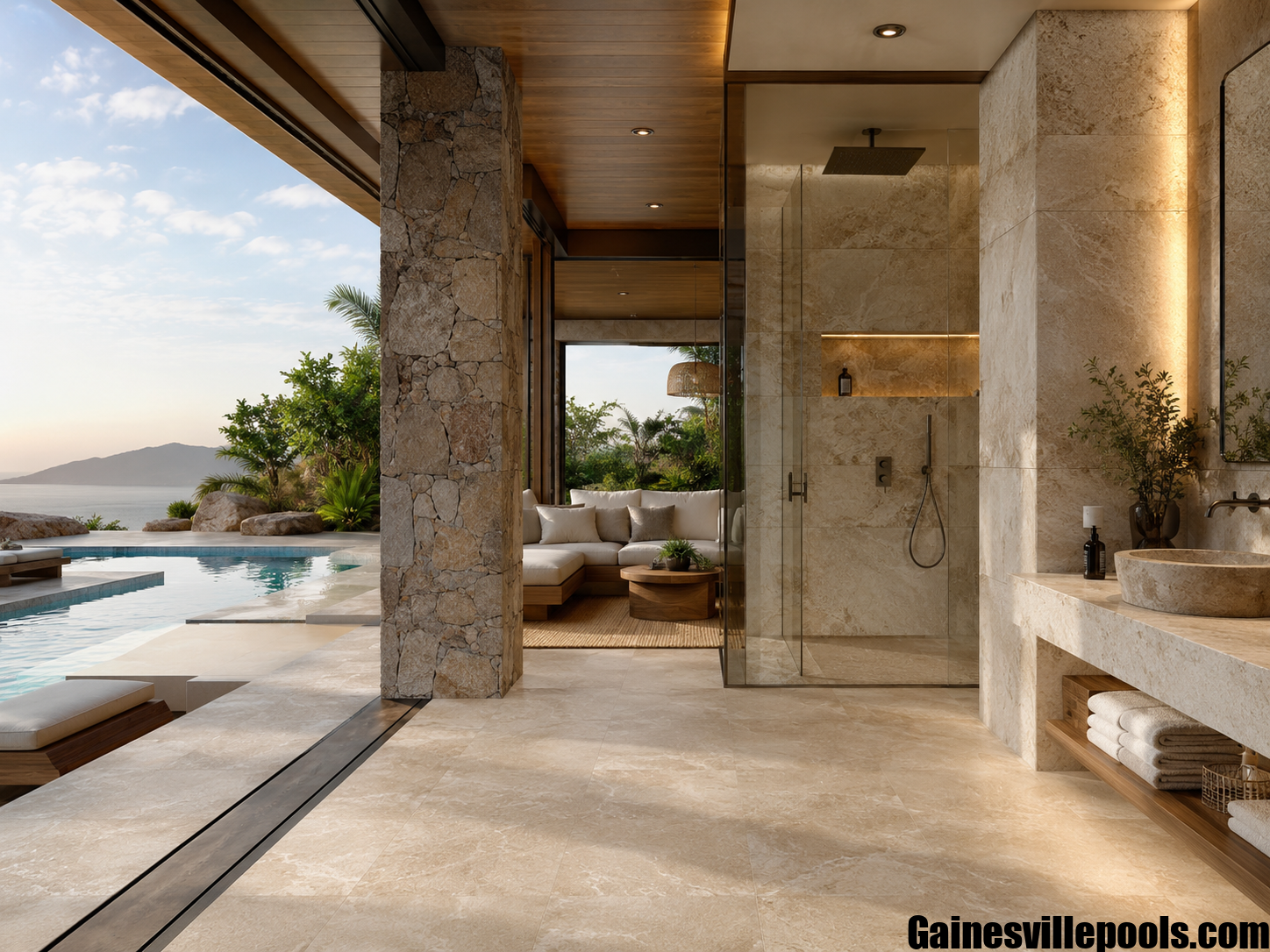
Luxury pool houses, spa bathrooms, and villa retreats are no longer treated as simple support spaces around a swimming pool. In high-end residential design, these areas often become lifestyle zones where architecture, wellness, outdoor living, and hospitality-inspired comfort come together. Natural stone plays an important role in this transformation because it can connect indoor and outdoor spaces, create a premium atmosphere, and support long-term design value.
For homeowners, designers, developers, and contractors, choosing natural stone for poolside and retreat spaces requires more than selecting a beautiful slab. These areas often involve water exposure, humidity, sunlight, changing temperatures, wet feet, cleaning routines, and frequent use by guests. A marble wall that looks elegant in a dry living room may need a different finish, installation method, or maintenance plan when used near a pool house bathroom or spa shower. A stone floor that looks polished and luxurious may not be the best choice for every wet walking area.
This article explores practical natural stone ideas for luxury pool houses, spa bathrooms, villa retreats, and hospitality-style residential spaces. It explains where marble and other natural stones can be used, how buyers should think about finish and application, and what project teams should confirm before ordering stone for wet-area and lifestyle-oriented villa spaces.
Why Natural Stone Works Well in Pool Houses and Villa Retreats
Natural stone is widely used in luxury villa projects because it offers a sense of permanence and refinement that many synthetic materials struggle to match. Around pool houses and spa-style spaces, stone can also create a visual connection between architecture and landscape. The right stone surface can make a pool house feel like part of the villa rather than a separate utility structure.
In luxury residential design, pool houses often include more than changing rooms. They may include:
- Spa bathrooms
- Shower rooms
- Lounge areas
- Outdoor kitchens
- Bar counters
- Fireplace or seating zones
- Guest suites
- Wellness rooms
- Massage or sauna areas
- Covered terraces
Each of these areas has different requirements. A poolside bar counter must be durable and easy to clean. A spa bathroom wall should feel calm and refined. A shower wall needs water-area planning. A lounge floor should look elegant but still support practical movement between indoor and outdoor zones. For these reasons, natural stone should be selected according to application, not only appearance.
When villa owners or project buyers need marble for wet-area luxury bathrooms, shower walls, vanity tops, and bathtub surrounds, working with a bathroom marble supplier can help them review material selection, finish, custom fabrication details, and packing requirements before production begins.
Key Natural Stone Applications in Luxury Pool Houses
A pool house usually needs materials that can handle both elegance and practicality. Natural stone may appear in many different areas, but the best results come from planning each surface according to how people will use the space.
Pool House Flooring
Flooring is one of the most important decisions. Pool house floors often connect wet outdoor areas with indoor lounge or bathroom spaces. The surface should feel luxurious, but it also needs to be reviewed for slip concerns, cleaning, drainage, and comfort.
Common options include honed limestone, textured marble, travertine, granite, or other natural stones with suitable surface finishes. Highly polished marble may look beautiful, but project teams should carefully review whether it is appropriate in areas where water may be present. In many pool house settings, a honed, brushed, or textured finish may be more practical than a glossy surface.
Important flooring questions include:
- Will people walk barefoot from the pool into the room?
- Is the floor in a wet or dry area?
- Is drainage required?
- Will the floor be exposed to direct sunlight?
- How often will the area be cleaned?
- Does the stone need to continue visually into an outdoor terrace?
Spa Bathroom Walls
Spa bathrooms are one of the best places to use marble or other refined natural stone. Large-format wall panels can reduce joint lines and create a calmer, more premium feeling. A marble wall behind a bathtub, vanity, or shower area can become the visual focus of the space.
However, bathroom wall stone should be selected with moisture conditions in mind. The buyer should confirm finish, sealing expectations, joint planning, installation method, and cleaning routine. If the bathroom is used frequently by guests, material selection should balance luxury appearance with practical maintenance.
Soft white, beige, cream, and warm grey marble can create a calm spa feeling. More dramatic marble can work well behind a freestanding bathtub or feature wall, but it should not overwhelm a small bathroom. The scale of the stone pattern should match the room size.
Shower Wall Panels
Luxury pool houses often include shower rooms where guests can rinse before or after swimming. Natural stone shower walls can create a high-end resort atmosphere, especially when large panels are used. Fewer joints can make the wall look cleaner and more architectural.
For shower wall panels, buyers should consider:
- Water exposure
- Surface finish
- Joint position
- Panel size
- Cleaning expectations
- Installation method
- Stone thickness
- Edge details
A shower wall should not be chosen only by color. The project team should discuss whether the selected stone is suitable for the intended wet-area use and how it should be installed and maintained.
Vanity Tops and Wash Areas
Pool house bathrooms and spa retreats often use marble or natural stone vanity tops to create a hotel-level experience. A vanity top may look simple, but it requires accurate fabrication. Sink cutouts, faucet holes, backsplash height, edge profiles, polishing, and packing protection all matter.
For custom villa projects, vanity tops may need to match wall cladding, flooring, bathtub surrounds, or cabinetry. In a pool house, the vanity area may also need to handle more frequent guest use, sunscreen residue, water, and cleaning. This makes material and finish selection especially important.
Bathtub Surrounds and Feature Walls
A pool house or villa retreat may include a spa bathtub, soaking tub, or wellness bathing area. Natural stone can create a strong focal point around these features. A calm marble background can make the space feel peaceful, while a dramatic stone slab can create a more luxurious statement.
When planning stone around a bathtub, buyers should confirm:
- Wall elevation
- Tub position
- Stone panel size
- Edge details
- Water splash area
- Joint placement
- Lighting direction
- Maintenance expectations
A bathtub feature wall is often photographed and remembered, so the stone should be selected carefully. The final effect depends on slab movement, room scale, and lighting.
Outdoor Kitchens and Poolside Bars
Many luxury pool houses include outdoor kitchens, bar counters, or entertainment zones. Natural stone can be used for countertops, backsplashes, side panels, and service counters. In these areas, durability and maintenance become more important than in decorative walls.
The project team should review whether the stone will be exposed to sunlight, moisture, food, drinks, oils, cleaning products, or temperature changes. Some natural stones may require more maintenance than others. For heavily used poolside counters, buyers may consider stones with stronger practical performance and appropriate finishes.
Creating a Resort-Like Atmosphere with Stone
Luxury pool houses often borrow design ideas from resorts and boutique hotels. Natural stone helps create that atmosphere because it feels grounded, calm, and premium. The most successful designs usually avoid overusing dramatic materials. Instead, they combine stone, wood, greenery, soft lighting, water, and outdoor views.
A resort-like villa retreat may include:
- Natural stone floors that continue toward the pool terrace
- Marble vanity tops in spa bathrooms
- Large stone panels behind a bathtub
- Textured stone walls near outdoor seating
- Warm wood ceilings or cabinetry
- Bronze, black, or brushed metal details
- Glass partitions that connect indoor and outdoor zones
- Soft lighting that highlights stone texture
The goal is to create a space that feels relaxed but still refined. This is different from using expensive stone everywhere. A well-designed pool house uses stone where it adds the most value, then balances it with softer materials.
How to Choose Stone by Pool House Area
Different parts of a pool house require different stone choices. Buyers should avoid selecting one material and applying it everywhere without considering function.
Wet Walking Areas
Wet walking areas need more practical surface review. The project team should consider finish, drainage, footwear, barefoot comfort, and cleaning. A textured or honed finish may be more suitable than a polished finish in many wet zones.
Dry Lounge Areas
Dry lounge areas allow more flexibility. Marble flooring, limestone, travertine, or other natural stones may be used to create a luxury atmosphere. If the lounge connects directly to the pool, the transition zone still needs practical review.
Shower Rooms
Shower rooms need careful planning for wall panels, floor finish, drainage, joints, and maintenance. Large-format natural stone panels can look elegant, but they require accurate fabrication and professional installation.
Vanity Areas
Vanity areas should be checked for sink cutouts, faucet placement, edge profiles, backsplash details, and cleaning conditions. The vanity top should match the overall stone palette of the pool house.
Outdoor Bar and Counter Areas
Outdoor counters should be selected for practical use. Buyers should consider exposure, food and drink contact, cleaning routines, and whether the stone will be protected by a roof or exposed to open air.
Why Project Coordination Matters
Natural stone in a pool house is rarely a one-item purchase. A project may involve flooring, wall cladding, vanity tops, shower panels, countertops, thresholds, steps, and exterior transition pieces. These items must work together in color, finish, thickness, and installation sequence.
For larger villa projects, the stone package may also need coordination with woodwork, lighting, glass, metal trims, cabinetry, plumbing fixtures, and landscaping. This is where a project-based supply approach becomes useful. A stone project supplier in China can support broader project coordination when buyers need material selection, fabrication, and application planning across multiple areas.
Project coordination can help reduce problems such as:
- Stone color mismatch between rooms
- Wrong finish for wet areas
- Vanity cutouts not matching sinks
- Wall panels arriving without sequence labels
- Flooring pieces not matching drawings
- Edge profiles being processed incorrectly
- Packing labels not matching installation areas
- Delays caused by missing custom pieces
The more complex the villa or pool house project, the more important it becomes to confirm details before production.
Design Ideas for Different Pool House Styles
Modern Minimalist Pool House
A modern minimalist pool house usually works best with calm stone colors, clean panel lines, and restrained finishes. White marble, light grey limestone, beige travertine, or soft-toned natural stone can be paired with glass, black metal, and warm wood accents.
Design suggestions:
- Use large-format stone panels for fewer joints
- Keep veining controlled and not overly dramatic
- Pair stone with matte wood or simple cabinetry
- Use soft indirect lighting instead of strong decorative lighting
- Choose practical finishes for wet walking areas
Mediterranean-Inspired Villa Retreat
A Mediterranean-style retreat may use warmer stones, textured finishes, limestone, travertine, or beige marble. These materials can create a relaxed, sun-washed atmosphere near the pool.
Design suggestions:
- Use warm beige or cream stone
- Combine stone with natural plaster and wood beams
- Consider textured finishes for outdoor transitions
- Use stone around arches, niches, and seating areas
- Keep the palette natural and warm
Contemporary Resort-Style Pool House
A resort-style pool house may combine marble, wood, greenery, glass, and water features. The goal is to feel luxurious but not formal.
Design suggestions:
- Use marble in the spa bathroom or vanity area
- Choose natural stone flooring that connects with the terrace
- Add wood ceilings or cabinetry for warmth
- Use large windows and sliding glass doors
- Keep the stone palette consistent across wet and dry zones
High-Drama Villa Spa
Some villa retreats are designed to feel bold and memorable. In these projects, dramatic marble can be used behind a bathtub, shower wall, or lounge feature wall. However, it should be placed selectively.
Design suggestions:
- Use dramatic stone in one main focal area
- Keep surrounding materials calmer
- Review lighting direction carefully
- Confirm full slab photos before approval
- Avoid using strong veining in too many areas
Practical Checklist Before Ordering Natural Stone
Before ordering natural stone for a pool house, spa bathroom, or villa retreat, buyers should confirm both design and technical details.
Design Information
- Project style and target atmosphere
- Indoor and outdoor connection
- Preferred stone color and pattern
- Main focal areas
- Lighting direction
- Wood, metal, and glass finishes
- Poolside furniture and landscaping plan
Technical Information
- Application area
- Wet or dry location
- Surface finish
- Stone thickness
- Cut-to-size dimensions
- Edge profiles
- Sink and faucet cutouts
- Shower wall panel sizes
- Bathtub surround details
- Outdoor exposure
- Packing and delivery requirements
Project Control Information
- Full slab approval
- Production drawings
- Quantity schedule
- Room or area labels
- Inspection photos
- Packing list
- Delivery timeline
- Installation sequence
These details help buyers avoid common mistakes and make the supplier’s quotation more accurate.
Common Mistakes to Avoid
Mistake 1: Choosing Stone Only by Color
Color is important, but it is not enough. Buyers should also review finish, application, maintenance, water exposure, and fabrication details. A stone that looks perfect in a sample may not perform well in a wet or heavily used area.
Mistake 2: Using Polished Stone Everywhere
Polished stone can be beautiful, but it may not be suitable for every pool house or spa bathroom area. Floors, showers, and wet walking zones should be reviewed carefully. A honed or textured finish may be better in certain applications.
Mistake 3: Ignoring Indoor-Outdoor Transitions
Pool houses often sit between interior living areas and outdoor pool terraces. If the stone design changes too suddenly, the space may feel disconnected. Buyers should consider how stone flooring, wall materials, and outdoor paving relate to each other.
Mistake 4: Not Confirming Custom Fabrication Details
Vanity tops, shower wall panels, thresholds, countertops, and bathtub surrounds all require accurate fabrication. Sink holes, faucet positions, edge profiles, and panel sizes should be confirmed before production.
Mistake 5: Forgetting Maintenance Expectations
Luxury does not remove the need for maintenance. Pool houses may face sunscreen, water, humidity, cleaning products, and outdoor dust. Buyers should understand how the chosen stone should be cleaned and maintained over time.
How Natural Stone Supports Long-Term Villa Value
Natural stone can add long-term value to villa projects because it is visually timeless, durable when selected properly, and strongly associated with high-end architecture. Pool houses and villa retreats are lifestyle spaces, and buyers often remember how these areas feel. A well-designed stone bathroom, lounge, or poolside bar can make a villa feel more complete and more desirable.
However, long-term value depends on correct selection and execution. Stone must be suitable for the application. Fabrication must match drawings. Installation must follow the project plan. Packing and delivery must protect finished pieces. When these steps are handled carefully, natural stone can support both immediate luxury appeal and long-term residential quality.
FAQ
1. What is the best natural stone for a luxury pool house?
The best natural stone for a luxury pool house depends on where it will be used. Marble can work well for walls, vanity tops, and feature areas. Limestone, travertine, granite, or textured natural stone may be considered for flooring or outdoor transition areas. Buyers should review finish, wet-area use, cleaning, sunlight exposure, and maintenance before choosing one stone for the entire project.
2. Can marble be used in a pool house bathroom?
Yes, marble can be used in a pool house bathroom, especially for wall cladding, vanity tops, bathtub surrounds, and feature walls. However, moisture exposure, surface finish, sealing expectations, joint planning, and cleaning routines should be reviewed carefully. Marble should be selected according to the specific bathroom area rather than only by color or pattern.
3. Is polished marble suitable for pool house floors?
Polished marble may look elegant, but it is not always the best choice for wet pool house floors. Areas where people walk with wet feet should be reviewed for slip concerns, drainage, and cleaning. In many cases, honed, brushed, textured, or other less glossy finishes may be more practical, depending on the project requirements and installation method.
4. How do you make a pool house feel luxurious?
A pool house can feel luxurious when materials, lighting, layout, and outdoor views are coordinated. Natural stone, warm wood, glass, soft lighting, comfortable seating, high-quality fixtures, and clean transitions between indoor and outdoor areas can all help. The key is not to overuse expensive materials, but to place them where they create the strongest visual and practical value.
5. What should buyers confirm before ordering stone for a villa retreat?
Buyers should confirm application areas, wet or dry use, stone type, surface finish, thickness, dimensions, edge profiles, cutouts, wall panel layout, outdoor exposure, maintenance expectations, packing requirements, and delivery schedule. For spa bathrooms, shower walls, vanity tops, and poolside areas, custom fabrication details should be checked before production begins.
Conclusion
Natural stone can transform pool houses, spa bathrooms, and villa retreats into refined lifestyle spaces. It can make a poolside area feel more architectural, a bathroom feel more spa-like, and a villa retreat feel closer to a private resort. But successful stone use depends on more than appearance. Buyers should consider water exposure, finish, maintenance, fabrication, installation, and long-term use.
For luxury villa projects, the best results usually come from a balanced material strategy. Marble may define the most important bathroom or feature wall areas. Textured stone may support safer poolside movement. Wood, metal, glass, and lighting can soften the stone and create a more comfortable atmosphere. When these materials work together, a pool house becomes more than a support space. It becomes part of the villa’s luxury living experience.