
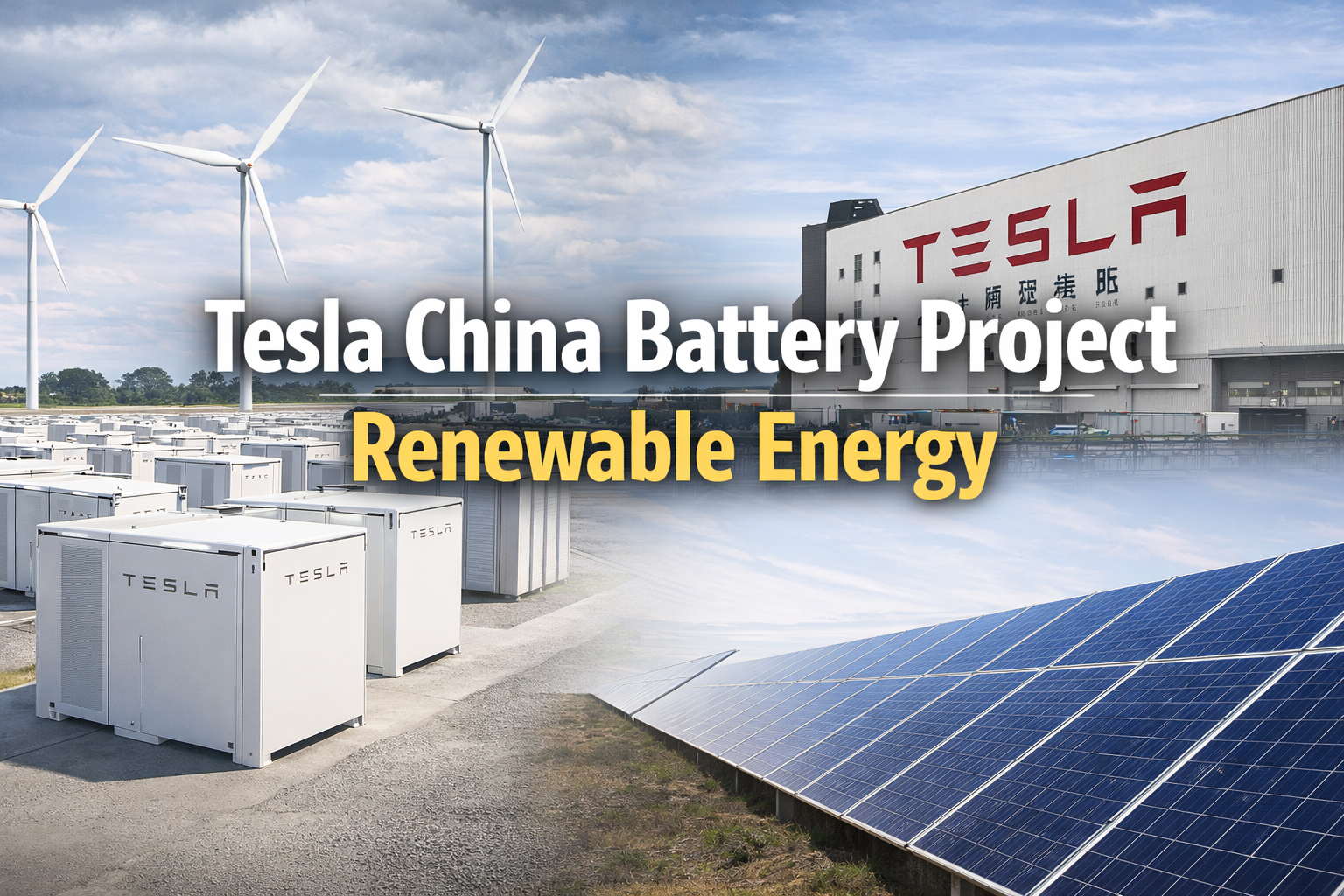
The transition toward clean energy has become one of the most significant global priorities of the 21st century. Governments, technology companies, and energy providers are investing heavily in renewable energy infrastructure to reduce carbon emissions and build more sustainable power systems. Among the companies leading this transformation is Tesla, a technology company widely known for electric vehicles and advanced battery innovations.
One of Tesla’s most ambitious energy initiatives is the Tesla China Battery Project Renewable Energy, a large-scale effort focused on producing advanced energy storage systems in China. The project centers on a massive manufacturing facility in Shanghai designed to produce Megapack battery systems that can store electricity generated from renewable sources such as solar and wind.
As renewable energy continues to expand globally, the ability to store electricity efficiently has become essential. Tesla’s energy storage project in China represents a major step forward in solving this challenge while helping accelerate the world’s transition to sustainable energy systems.
The Vision Behind Tesla’s Renewable Energy Strategy
Tesla’s long-term mission extends beyond electric vehicles. The company aims to create a complete ecosystem for sustainable energy generation, storage, and consumption. While electric cars help reduce emissions from transportation, energy storage solutions are necessary to support renewable power grids.
Renewable energy sources such as solar and wind are environmentally friendly but naturally inconsistent. Solar panels generate electricity only during daylight hours, and wind turbines depend on weather conditions. Without storage solutions, excess energy produced during peak generation periods can be wasted.
This is where large-scale battery systems become crucial. Energy storage technologies allow electricity generated from renewable sources to be stored and used later when demand increases. Tesla’s renewable energy strategy focuses heavily on these storage systems, making projects like the Tesla China Battery Project especially important for the future of clean energy.
Overview of the Tesla China Battery Project
The Tesla China Battery Project focuses on manufacturing Megapack energy storage systems at a large factory in Shanghai. The facility is located in the Lingang area of Shanghai, a region that has rapidly developed into a hub for advanced manufacturing and clean energy technology.
The project required a significant investment and is designed to produce thousands of energy storage units annually. These battery systems are intended for large-scale energy infrastructure projects, including renewable power plants and national electricity grids.
Each Megapack unit is capable of storing a substantial amount of electricity, allowing energy companies and utilities to balance supply and demand more effectively. By manufacturing these batteries in China, Tesla can supply the rapidly growing Asian renewable energy market while also exporting energy storage systems to other regions around the world.
The Role of Megapack Technology
The centerpiece of the Tesla China Battery Project Renewable Energy initiative is the Megapack battery system. Megapack is a large-scale lithium-ion battery designed specifically for power grid applications. Unlike smaller batteries used in homes or electric vehicles, Megapacks are built to store massive amounts of electricity and support entire power networks.
Each Megapack unit integrates multiple battery modules, power electronics, thermal management systems, and software controls into a single container-sized system. These units can be connected together to create enormous battery storage facilities capable of powering thousands of homes.
Megapack systems also include advanced energy management software that monitors electricity demand and automatically distributes stored energy when needed. This technology helps stabilize power grids, reduce outages, and ensure that renewable energy can be used efficiently.
Why China Is a Strategic Location
China is the world’s largest renewable energy market and a major global leader in solar power, wind energy, and battery manufacturing. The country has made massive investments in clean energy infrastructure as part of its long-term plan to reduce carbon emissions and transition to a low-carbon economy.
Because of this rapid growth, China requires large-scale energy storage solutions to manage the electricity generated from renewable sources. Battery systems like Tesla’s Megapack are essential for ensuring that solar and wind energy can be integrated into the national power grid without causing instability.
By building a battery manufacturing facility in China, Tesla gains several strategic advantages. The country already has an extensive supply chain for lithium-ion batteries, as well as access to skilled engineers and advanced manufacturing technologies. This environment allows Tesla to scale production efficiently while meeting the increasing demand for energy storage.
Supporting Renewable Energy Infrastructure
One of the most important goals of the Tesla China Battery Project Renewable Energy initiative is to support renewable energy infrastructure. As countries install more solar panels and wind turbines, power grids must adapt to handle fluctuating energy supply.
For example, solar power plants often produce more electricity than needed during the middle of the day. Without storage systems, this excess electricity cannot always be used and may go to waste. Battery systems solve this problem by storing surplus energy for later use.
Later in the evening, when electricity demand increases but solar generation stops, the stored energy can be released into the grid. This process helps maintain stable electricity supply while reducing reliance on fossil fuel power plants.
Megapack battery systems can also respond instantly to fluctuations in electricity demand, making them valuable tools for grid operators managing complex power networks.
Environmental Benefits of Large-Scale Battery Storage
The environmental impact of projects like the Tesla China Battery Project Renewable Energy initiative is significant. Energy storage systems play a critical role in reducing global carbon emissions by enabling greater use of renewable energy.
When renewable electricity can be stored and distributed efficiently, countries can reduce their dependence on coal, natural gas, and other fossil fuels. This shift leads to cleaner air, lower greenhouse gas emissions, and improved public health.
Battery storage systems also help prevent energy waste. Instead of discarding excess renewable electricity, energy providers can store it for future use. This improves the overall efficiency of renewable energy generation and makes sustainable power more reliable.
Economic Impact and Industry Growth
Beyond environmental benefits, the Tesla China battery project also contributes to economic growth. The construction and operation of the Megapack factory create jobs in manufacturing, engineering, logistics, and energy infrastructure development.
The project also strengthens the global supply chain for renewable energy technologies. As demand for energy storage increases worldwide, battery manufacturing facilities like Tesla’s Shanghai factory will play a key role in meeting global demand.
China’s renewable energy industry is expanding rapidly, and the addition of large-scale battery production capacity helps support this growth. By producing Megapack systems locally, Tesla can supply energy projects across Asia while also exporting battery systems to international markets.
Global Expansion of Energy Storage
The Tesla China Battery Project Renewable Energy initiative is part of a broader global trend toward grid-scale energy storage. Energy companies around the world are increasingly investing in large battery installations to support renewable power systems.
Several countries have already built massive battery storage facilities capable of stabilizing entire regional power grids. These projects demonstrate how energy storage can improve electricity reliability while reducing carbon emissions.
Tesla has been a major participant in this movement. Its Megapack battery installations have been deployed in various locations around the world to support renewable energy integration and grid stability.
As renewable energy continues to grow, the need for energy storage will become even more critical. Battery projects like the one in Shanghai will likely become a central part of future energy infrastructure.
Challenges and Future Opportunities
Although battery storage technology has advanced significantly, there are still challenges that companies must address. These include improving battery efficiency, reducing manufacturing costs, and ensuring sustainable sourcing of raw materials such as lithium and nickel.
Tesla and other energy technology companies are actively researching new battery chemistries and production methods to improve performance while reducing environmental impact. Innovations in battery recycling and alternative materials may also help make energy storage more sustainable in the long term.
Despite these challenges, the future of battery storage remains extremely promising. As renewable energy adoption accelerates, demand for energy storage systems will continue to grow. Projects like the Tesla China battery initiative demonstrate how technology and infrastructure can work together to support a cleaner energy future.
The Future of Tesla’s Energy Projects
Tesla’s investment in renewable energy storage is expected to expand in the coming years. The company continues to develop new battery technologies and explore opportunities to build additional energy storage facilities around the world.
The Shanghai Megapack factory represents a major milestone in Tesla’s energy business. By producing thousands of battery systems annually, the facility helps supply the rapidly expanding renewable energy sector.
As more countries commit to reducing carbon emissions and adopting clean energy technologies, the role of battery storage will become increasingly important. Tesla’s China battery project positions the company as a major contributor to this global transformation.
Conclusion
The Tesla China Battery Project Renewable Energy initiative represents a significant step forward in the global transition toward sustainable energy systems. By producing advanced Megapack battery storage systems in Shanghai, Tesla is helping power grids integrate renewable energy more effectively while reducing reliance on fossil fuels.
Energy storage technologies are essential for making solar and wind power reliable and efficient. Projects like Tesla’s battery manufacturing facility in China demonstrate how innovation, manufacturing scale, and renewable energy infrastructure can work together to create a cleaner energy future.
As renewable energy continues to expand worldwide, large-scale battery systems will play an increasingly vital role in stabilizing electricity grids and enabling sustainable power generation. The Tesla China battery project stands as a powerful example of how technology can drive progress toward a more resilient and environmentally responsible global energy system.