
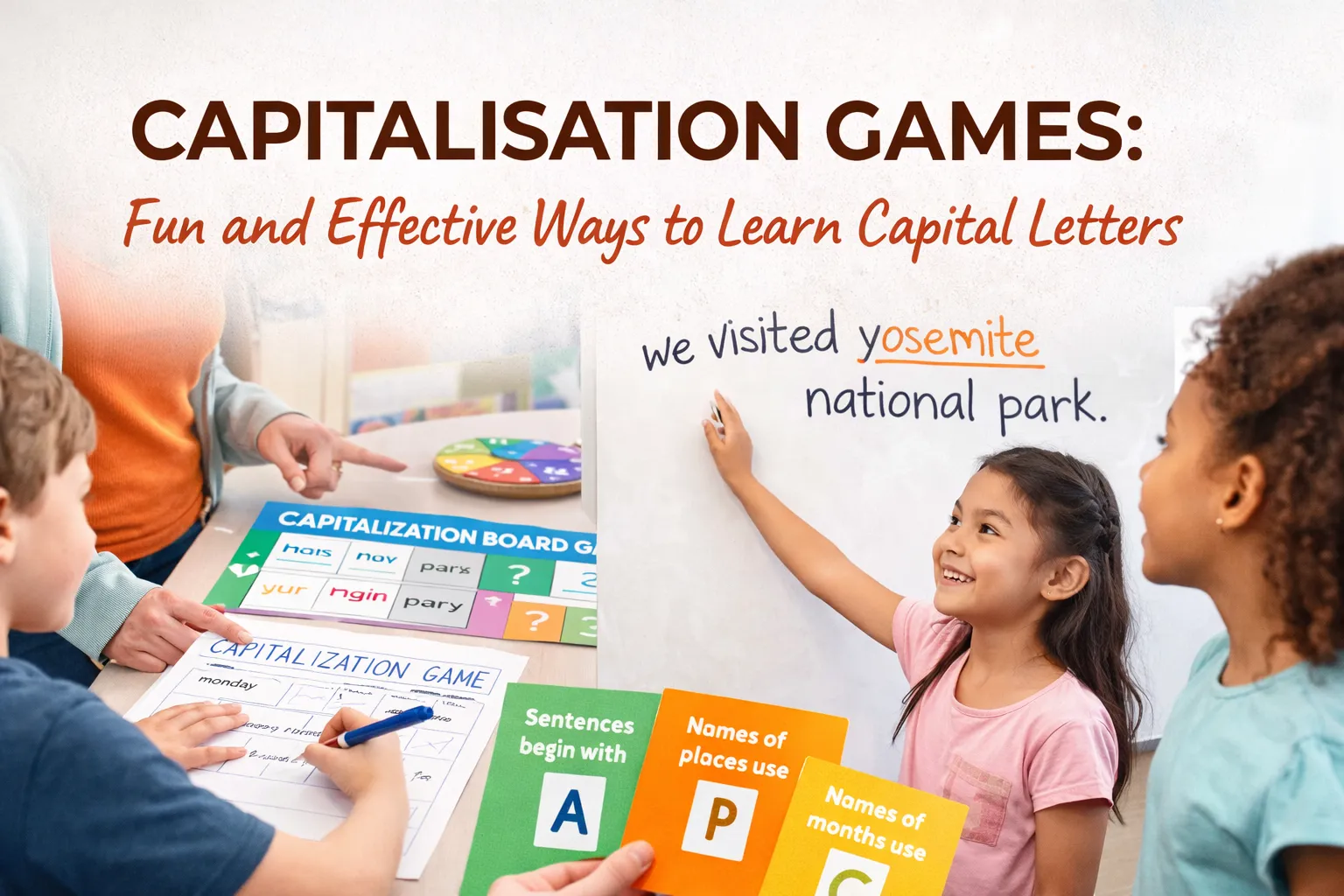
What Are Capitalisation Games
Capitalisation games are interactive learning activities designed to help students understand and practice the correct use of capital letters in writing. Instead of teaching grammar through memorization alone, these games transform language rules into engaging challenges that encourage learners to participate actively in the learning process.
In classrooms, homeschooling environments, and digital education platforms, capitalisation games are widely used to make grammar lessons more enjoyable and easier to understand. They involve tasks such as correcting sentences, sorting words, solving puzzles, or answering questions related to capital letter usage. These activities allow students to practice important writing rules in a dynamic and memorable way.
Why Learning Capital Letters Is Important in Writing
They help readers understand the structure of sentences and identify important elements such as names, places, and titles. Proper capitalization improves clarity, readability, and professionalism in writing.
When learners master capitalization rules early, they develop stronger writing habits that benefit them throughout their academic journey and professional life. Capitalisation games help students practice these rules repeatedly in an enjoyable environment, making learning both effective and fun.
Understanding Capitalisation Rules
Capital Letters at the Beginning of Sentences
One of the most fundamental grammar rules is that every sentence must begin with a capital letter. This rule signals the start of a new thought or statement and helps readers follow the flow of text.
Capitalisation games often include exercises where students identify sentences that begin with lowercase letters and correct them by adding the appropriate capital letter.
Capitalising Names and Proper Nouns
Games may involve identifying proper nouns within a sentence or sorting words into categories based on whether they require capitalization.
Capitalising Days, Months, and Holidays
Words that refer to days of the week, months of the year, and holidays must also be capitalized. Examples include Monday, July, and New Year’s Day.
Students often practice this rule through quizzes or word-matching games where they correct incorrect capitalization.
Capitalising Places, Organizations, and Titles
Names of buildings, companies, books, movies, and official titles require capital letters. For example, “The White House,” “Amazon,” or “Harry Potter.”
Capitalisation games encourage learners to identify these special words and understand why they need to be written with capital letters.
Why Capitalisation Games Are Effective for Learning
Making Grammar Lessons Interactive
Grammar lessons can sometimes feel difficult or repetitive for students. Capitalisation games transform these lessons into interactive activities that keep learners engaged.
When students participate in games, they become active participants in the learning process instead of passive listeners.
Improving Student Engagement and Motivation
Games naturally capture attention. Whether students are competing in teams, solving puzzles, or completing challenges, the element of fun encourages them to stay focused and motivated.
This increased engagement helps learners absorb grammar concepts more effectively.
Enhancing Memory and Language Skills
Educational research shows that people remember information better when it is associated with enjoyable experiences. By practicing capitalization rules through games, students strengthen both their memory and language skills.
The repetition involved in these activities reinforces grammar rules in a natural and enjoyable way.
Types of Capitalisation Games Used in Classrooms
Sentence Correction Games
In sentence correction games, students are given sentences with incorrect capitalization. Their task is to find the mistakes and rewrite the sentence correctly.
This activity helps learners identify errors and understand how capitalization rules apply in real writing situations.
Capitalization Sorting Activities
Sorting games involve categorizing words into groups such as proper nouns and common nouns.
This activity strengthens grammar awareness and improves vocabulary recognition.
Classroom Board Games for Grammar
Board games designed for grammar learning often include question cards about capitalization rules. Students move across the board by answering questions correctly.
These games create excitement and encourage friendly competition among learners.
Team-Based Capitalisation Challenges
Teachers sometimes organize team challenges where groups compete to correct sentences or identify capitalization errors on the board. These collaborative activities encourage teamwork and discussion among students.
Online Capitalisation Games and Digital Learning Tools
Interactive Grammar Learning Websites
Many educational websites provide digital capitalization games that allow students to practice grammar rules online. These platforms include quizzes, puzzles, and drag-and-drop activities.
Students receive instant feedback, which helps them understand mistakes and improve quickly.
Educational Apps for Capitalisation Practice
Mobile learning apps offer another convenient way for students to practice capitalization. These apps include interactive lessons, mini-games, and progress tracking features that support independent learning.
Benefits of Digital Learning Platforms
Digital platforms make grammar practice accessible anytime and anywhere. They also provide personalized learning experiences by adjusting difficulty levels based on student performance.
Popular Capitalisation Game Ideas for Teachers
Capitalisation Race Game
In this activity, students race to the board to correct sentences with missing capital letters. The first student to complete the correction correctly earns points for their team.
This fast-paced game keeps students energized and focused.
Grammar Quiz Challenges
Quiz-style games present students with questions about capitalization rules. Teams compete to answer correctly and earn points.
This format encourages students to review grammar concepts while enjoying friendly competition.
Card Sorting and Matching Games
Teachers can create sets of cards with different words and phrases. Students must match proper nouns with their correct capitalization or group words into appropriate categories.
Drag-and-Drop Sentence Activities
In digital classrooms, drag-and-drop exercises allow students to place capital letters in the correct positions within sentences. These interactive tasks are both fun and educational.
Benefits of Using Capitalisation Games in Education
Strengthening Writing Skills
By repeatedly practicing capitalization rules, students develop stronger writing skills and improve the clarity of their sentences.
Encouraging Collaborative Learning
Many capitalization games involve teamwork and group discussions. These activities help students communicate ideas and learn from one another.
Building Confidence in Language Use
As students successfully complete grammar challenges, their confidence in writing grows. They become more comfortable applying capitalization rules in essays, assignments, and everyday communication.
Capitalisation Games for Home Learning
Simple Grammar Games Parents Can Use
Parents can support children’s writing skills by playing simple capitalization games at home. Activities such as correcting sentences or identifying proper nouns can be both educational and fun.
Printable Worksheets and Activities
Printable worksheets with capitalization puzzles and exercises provide an easy way for children to practice grammar outside the classroom.
Online Resources for Practice
Educational websites and apps offer numerous capitalization games suitable for home learning. These resources allow children to practice grammar independently while enjoying interactive activities.
Tips for Teachers When Using Capitalisation Games
Choosing Age-Appropriate Activities
Teachers should select games that match the age and skill level of their students. Younger learners benefit from simple activities, while older students may enjoy more complex challenges.
Balancing Fun with Learning Objectives
While games should be enjoyable, they must also focus on clear educational goals. Activities should reinforce specific capitalization rules.
Assessing Student Progress Through Games
Teachers can use games as informal assessments to measure how well students understand capitalization concepts. Observing student responses during activities helps identify areas that need further practice.
The Role of Gamification in Modern Education
How Games Improve Language Learning
Gamification—the use of game elements in education—has become a powerful teaching method. By incorporating challenges, rewards, and competition, educators make learning more engaging and effective.
Future Trends in Digital Grammar Education
With the rise of educational technology, digital grammar games are becoming increasingly sophisticated. Interactive platforms, artificial intelligence, and personalized learning tools are shaping the future of language education.
These innovations help students master grammar skills in creative and engaging ways.
Conclusion of Capitalisation Games
Capitalisation games provide an innovative approach to teaching one of the most essential aspects of writing: the correct use of capital letters. By turning grammar lessons into interactive activities, educators create an environment where students can learn through participation, exploration, and friendly competition.
From classroom board games to digital learning apps, these activities help learners understand capitalization rules while strengthening reading and writing skills. As education continues to evolve, capitalisation games will remain a valuable tool for helping students develop clear, confident, and effective communication skills.